


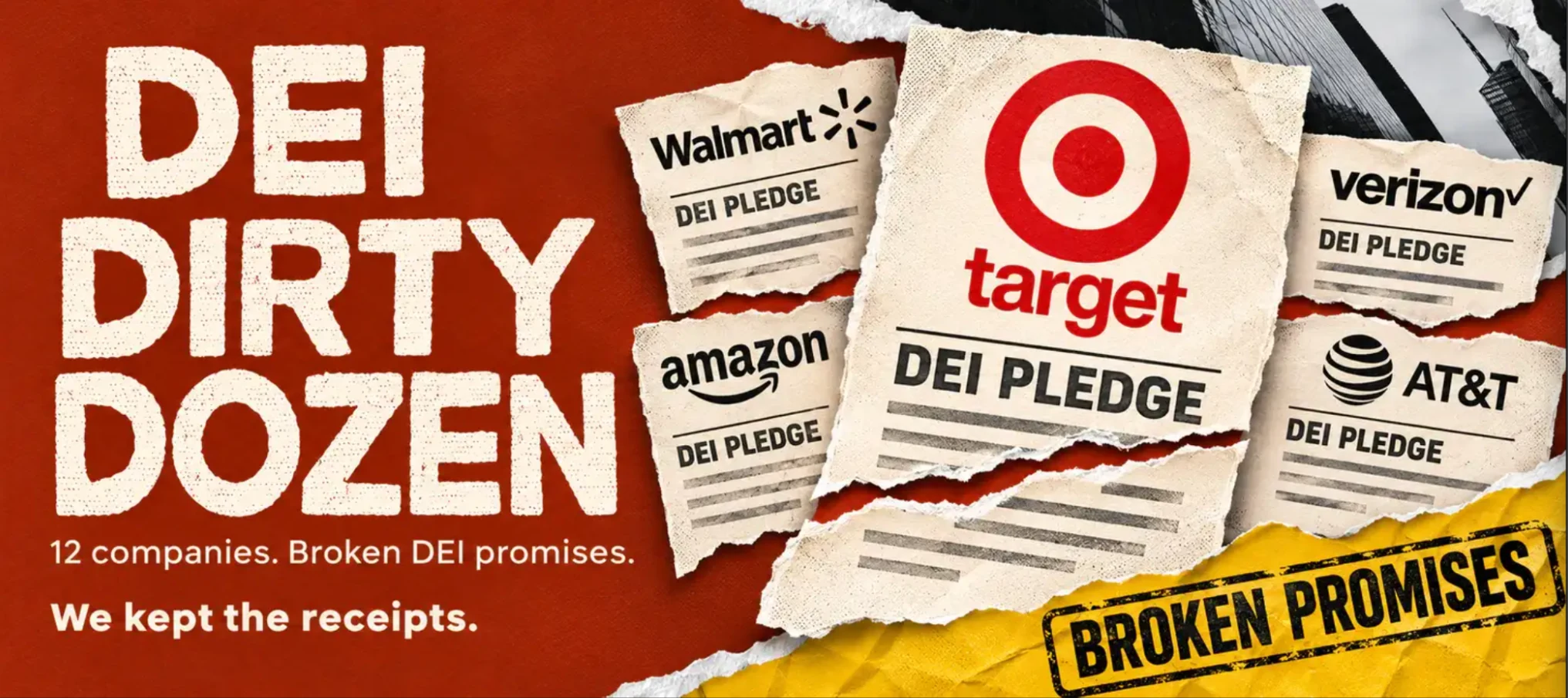
DEI Dirty Dozen
Remember the summer of 2020?
The World Was Watching as millions of us took to the streets to protest. Some of the biggest names in corporate America made promises: Open contracts to Black-owned businesses. Promote Black workers. Fund scholarships. Back the community groups already doing the work. They put it in press releases and annual reports. They put it in commercials. They asked us to believe them.
So many of us did.
They broke their promise.
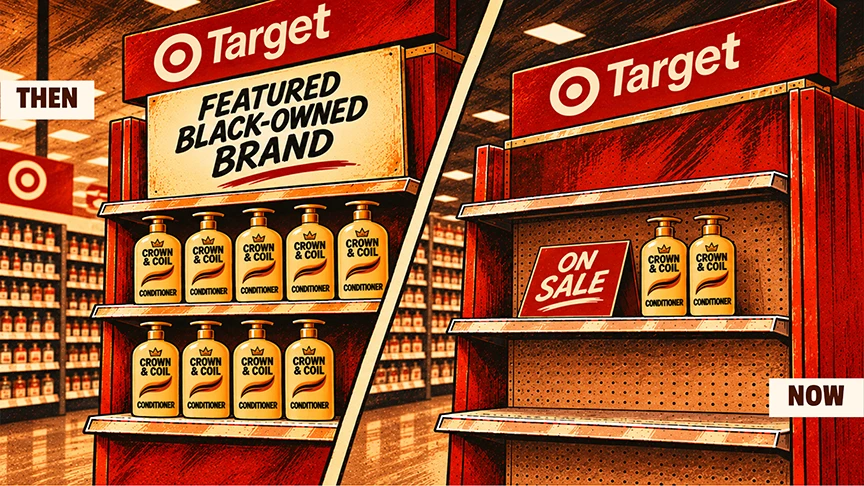
Then many of these companies broke their promises and walked back their commitments. They renamed programs and took away their teeth. Others walked away completely — ending programs and funding pledged in those promises. Their actions left harm and pain in their wake.
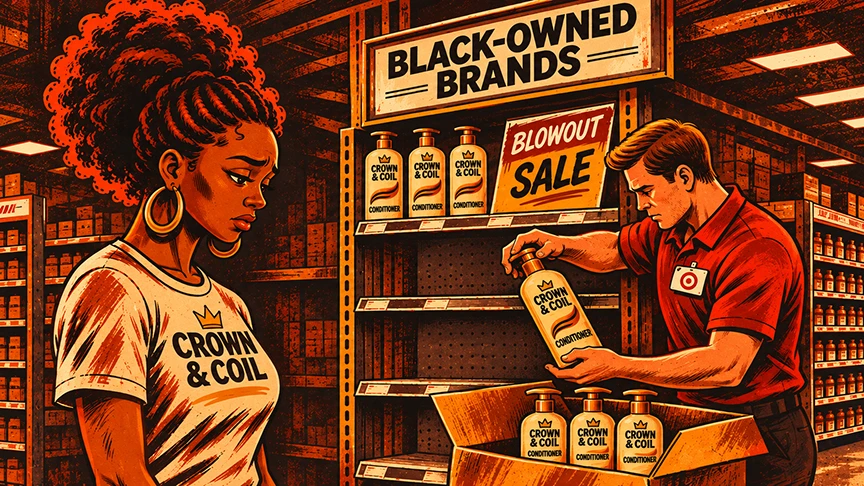
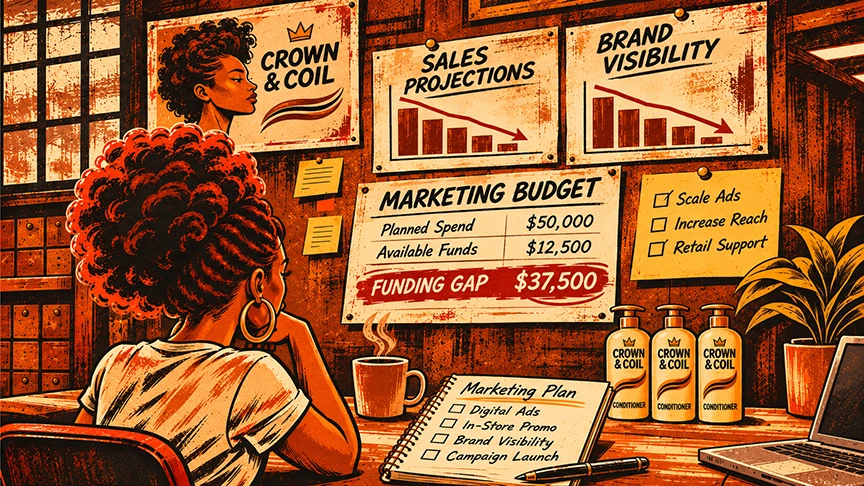
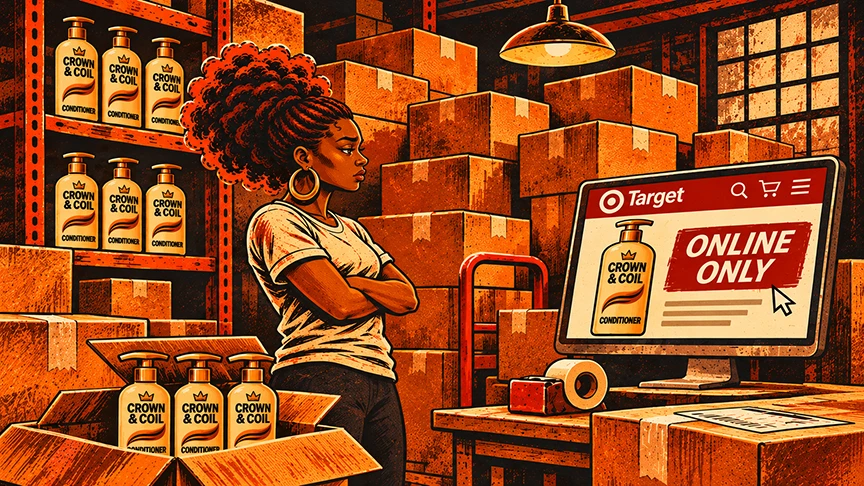
Careers stalled. Impact organizations were neutralized. Inventories were abandoned. Costs were passed on to us. Six years after the Pandemic, we are living in the wake of deferred dreams, quietly carrying the real costs of broken promises.
It’s time for accountability
The DEI Dirty Dozen is the first campaign on TheBlackCAT, the Corporate Accountability Tracker from Color Of Change. It is our list of twelve companies that made specific promises to Black workers, Black-owned businesses, and Black communities, then later pulled back.
This is the beginning, not the end. More corporations will be in the spotlight as we hold them to account for the harm they do to our communities.
We created this resource for those people, people like you, who’ve been harmed by companies that operate as if the legend of their brands excuses their record of harm in the Black community.
We have that record. We tell you what we know, what we do not, and what the company says in response. For each company, we follow the promise they made from start to finish. Beginning with what was said. Who did what and who took back what they said. Who paid the price. And what it would take to make it right.
We also name the ones who stood on business and stayed the course, kept their promises, and remained allies and champions. We show how and what they delivered.
See how TheBlackCAT keeps the record.
These are the twelve companies on the record — keep scrolling to see what each one promised, and what they did instead.
What they promised
—
What they did
—
They kept their promise
We also name the ones who stood on business and stayed the course, kept their promises, and remained allies and champions. We show how and what they delivered.

Walking back DEI wasn’t a business necessity — companies like Costco that kept their commitments performed just as well as, or better than, those that retreated. Explore the evidence from UC Berkeley, Harvard Law School, and recent innovation and finance studies showing that substantive inclusion — not DEI rollbacks — supports long-term performance.
How to Use the DEI Dirty Dozen
Three Steps to Take
Read the record.

Share the link.

Decide where you stand

